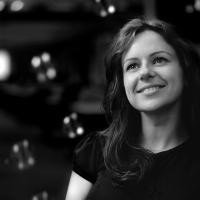
Raised in a rural village in Northeast England, Michelle Marie Forrest’s practice is profoundly shaped by an early life of structural precarity. From homes slated for demolition to an ex-council house that buckled over an abandoned mine shaft, she experienced physical and socio-economic instability firsthand. As a sickly child, she observed her parents’ relentless labour. She mirrored her mother’s rituals of cleaning and perpetual decorating, and learned to lay bricks with her father as he reconfigured the home to carve out individual spaces for their large, blended family.
As the first in her family to enter higher education, Forrest applied to art school at twenty-seven through low-income fee waivers. While saving for living costs, she trained as a database developer—conceptualising it as an electronic form of cleaning and building an anti-Ballardian “High-Rise”, reimagining social hierarchy by offering residents an equal footing. After graduating with a First-Class Honours degree in Fine Art at thirty, she moved to London to enter a contemporary art world previously inaccessible to her. Working in the financial district to pay off student loans and save for her Master’s, she witnessed the global financial crisis from the inside. This systemic instability became a defining undercurrent of her practice, prompting site-reflective installations in semi-derelict spaces across wealthy postcodes—such as Still Life and Cleanliness is next to Godliness—that interrogated domesticity and environmental cleansing.
Financial constraints eventually pulled Forrest back North for a residency, where she began processing the impact of the economic crash. Appropriating the commercial term “window dressing” to critique financial illusion, and influenced by Louise Bourgeois’ Cell Series, she constructed architectural units titled Moratoriums. Soon after, she began systematically emptying these units, precariously counterbalancing them as a declaration of a breaking point.
Completing her Master’s at forty, Forrest’s unstable approach to building culminated in Blind Faith. Reflecting on her intense work ethic and her father’s experience of becoming “jiggered”—a regional term she associates with him being left incapacitated by gruelling physical labour in his fifties—she developed a constellation of installations titled {net, works}, including Concentrate, {a violent intersection}, and Kalopsia. These works formed a deeply connected ecosystem, bringing to life the ideas in her text The Promise of a Scattered Methodology, where fragile connections act as deliberate loops—echoing the recurring cycles of labour, memory, and physical depletion and systemic fatigue.
By 2024, this methodology expanded further during a collaborative project with artist Steve Dutton under the moniker We Are Only Partly Real. Originating from a Spike Island digital commission, their joint practice spanning language-based art, moving image, code, and immersive installation began investigating how meaning shifts across bodies, systems, and spaces, staging artworks not as static objects but as dynamic fields where perception is actively reorganised through the interplay of time, materials, and information.
This year (2026), Forrest received a diagnosis of AuDHD following recurring periods of burnout. Contemplating this neurological landscape as the root of her restless iteration—repeating, refining, and modifying—her practice has become a total rejection of static, finished structures. Instead, it exists as an accumulation of work in constant flux—a vital framework she describes as essential “for navigating the volatility of socioeconomic systems and their tangible, physical realities.”