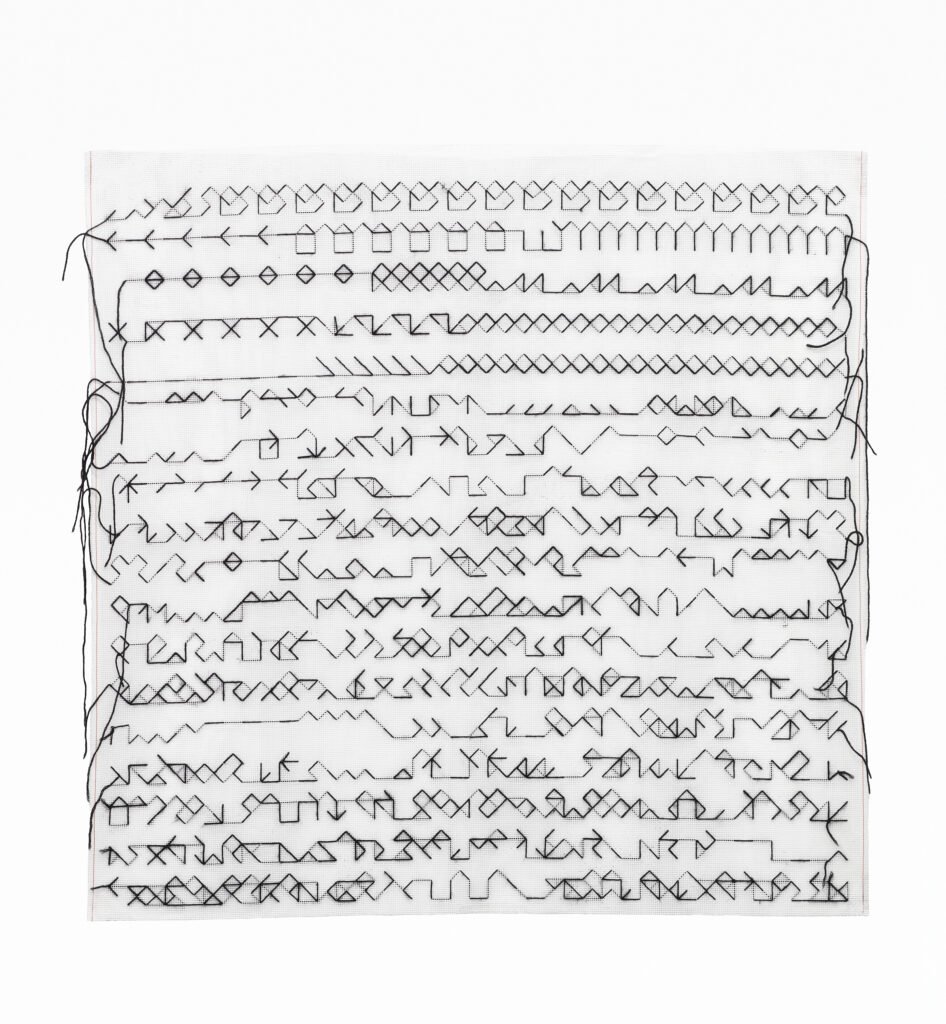
c0de to Home: A Series of one Liners, 2024
Materials: Embroidery canvas, yarn
Dimensions: 94cm W x 94cm H
Photo Credit: Dan Weill
Since 2015, my sculptural practice has shifted under the influence of digital technology, oscillating between cycles of order and chaos. Reflecting on how algorithmic platforms quietly govern and constrain daily life, I have began exploring ways to bridge the digital with the physical.
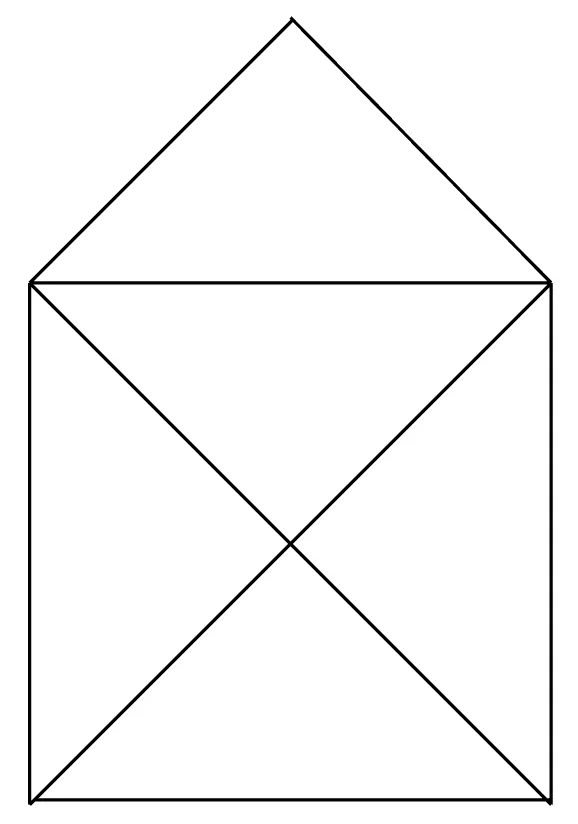
c0de to Home: A Series of One Liners (2024) emerged while navigating the absurdity of trying—and failing—to buy my first home three separate times. Subverting the traditional embroidery sampler to treat domestic space not as a secure sanctuary, but as a site of ongoing precarity, the work materialises as a series of unsolvable house puzzles that translate systemic frustration and the unfulfilled promise of shelter.
The house puzzle (right) is traditionally drawn from one continuous, non-overlapping line, yet c0de to Home ensures this house-puzzle never completes.
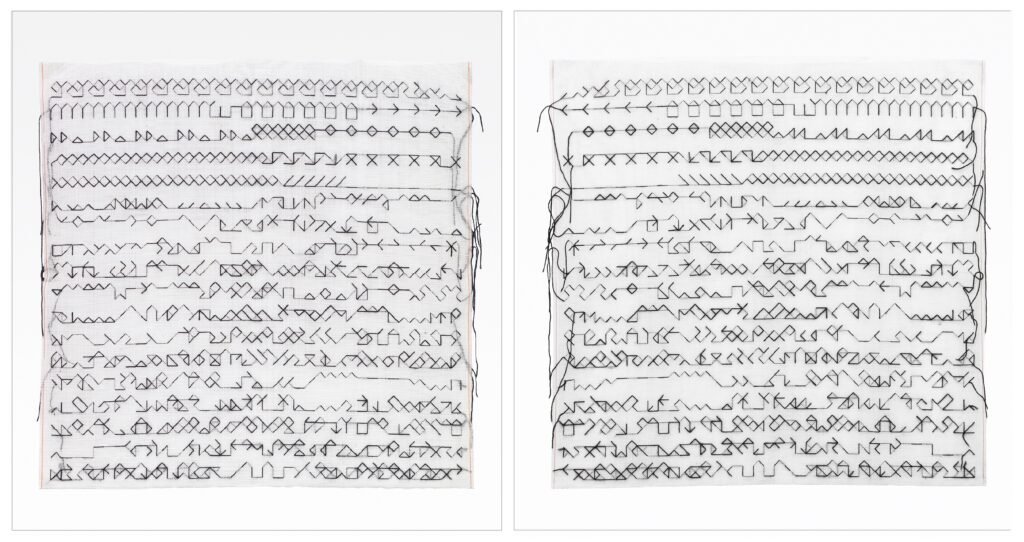
c0de to Home: A Series of one Liners (recto / verso), 2024
——————————————————————————————————–
In 2025, while working on the AHRC funded pilot virtual exhibition We Are Only Partly Real ( video below), a turning point came 12 minutes 50seconds in, when seeing a virtual representation of my physical embroidery turned upside down within a sonic landscape. This experience led me to reimagine my intricate textile as an immersive, architectural-scale installation, where art, technology, and human presence becomes enmeshed.
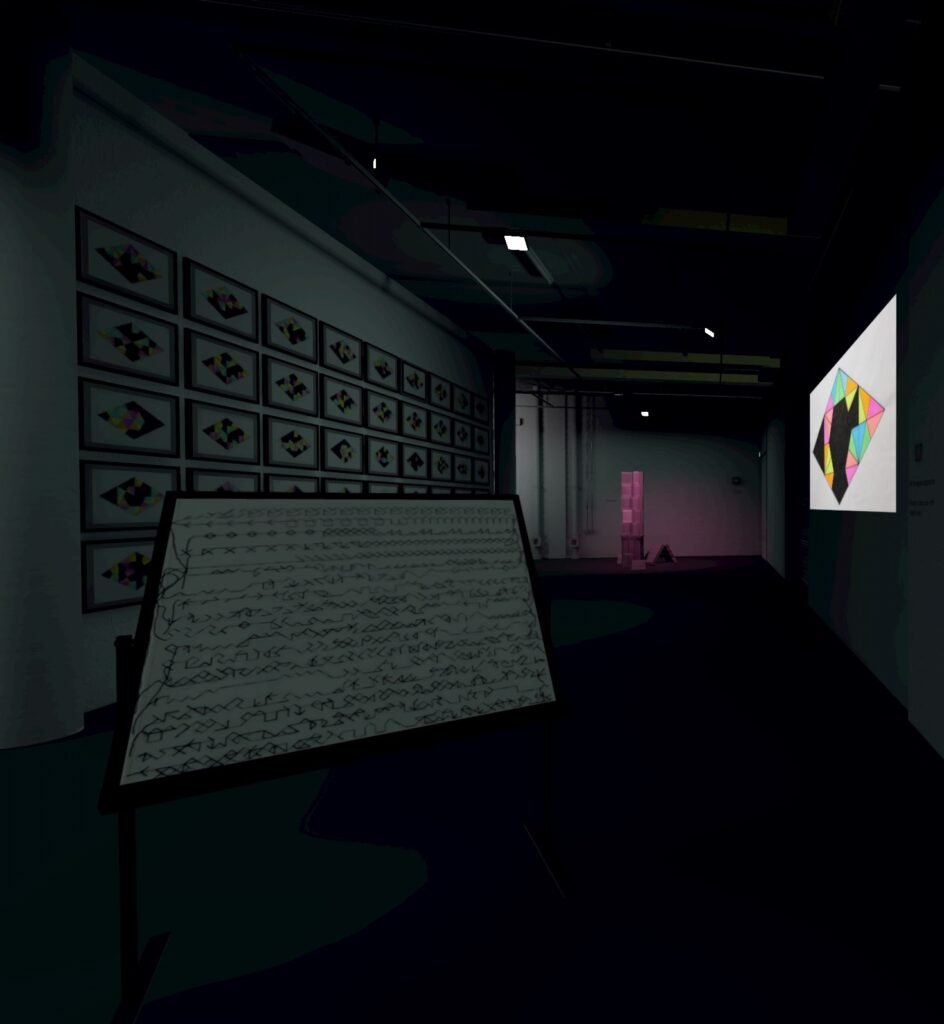
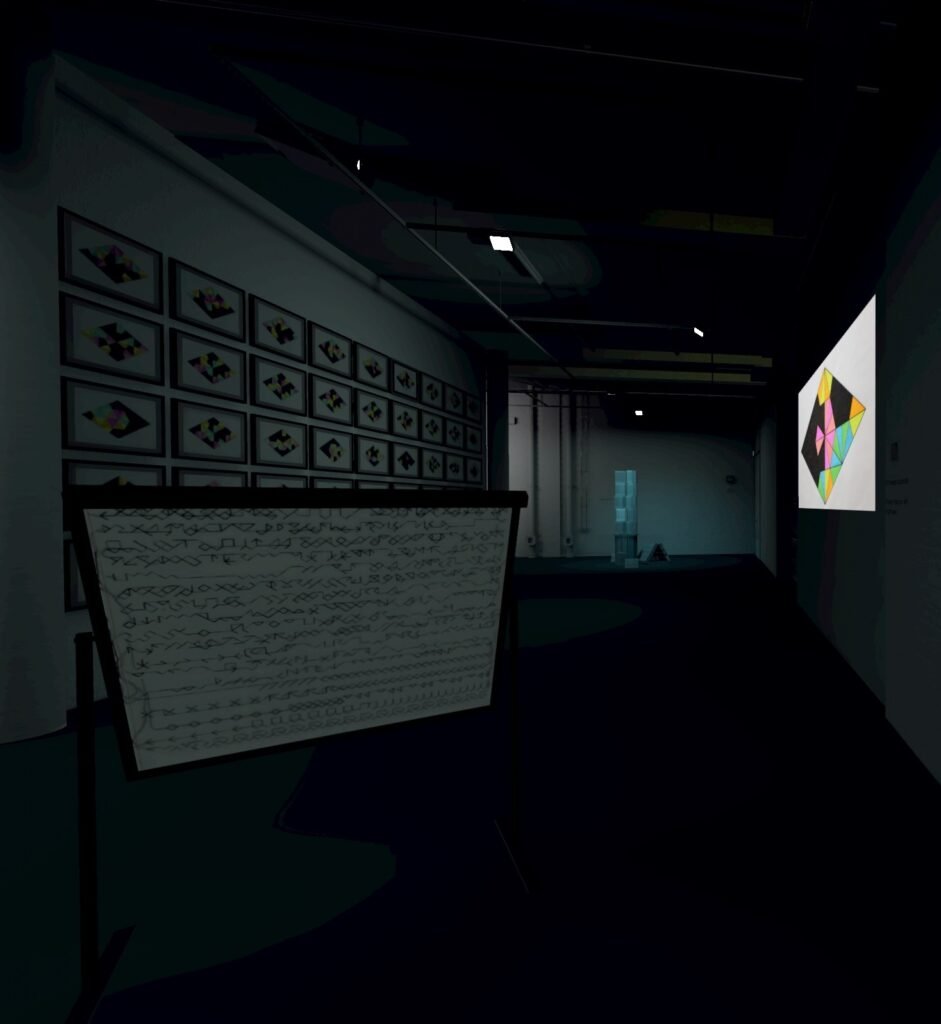
We Are Only Partly Real (night cycle), 2025
VR image credit: Stephen Gray
We Are Only Partly Real, 2025
VR Exhibition video walk-through (17 minutes 17 seconds)
——————————————————————————————————–
In Oct 2025, c0de to Home featured alongside my slowly-processed algorithmic drawing series, in the AXIS online exhibition Patterns and Process, curated by digital artist Antonio Roberts.
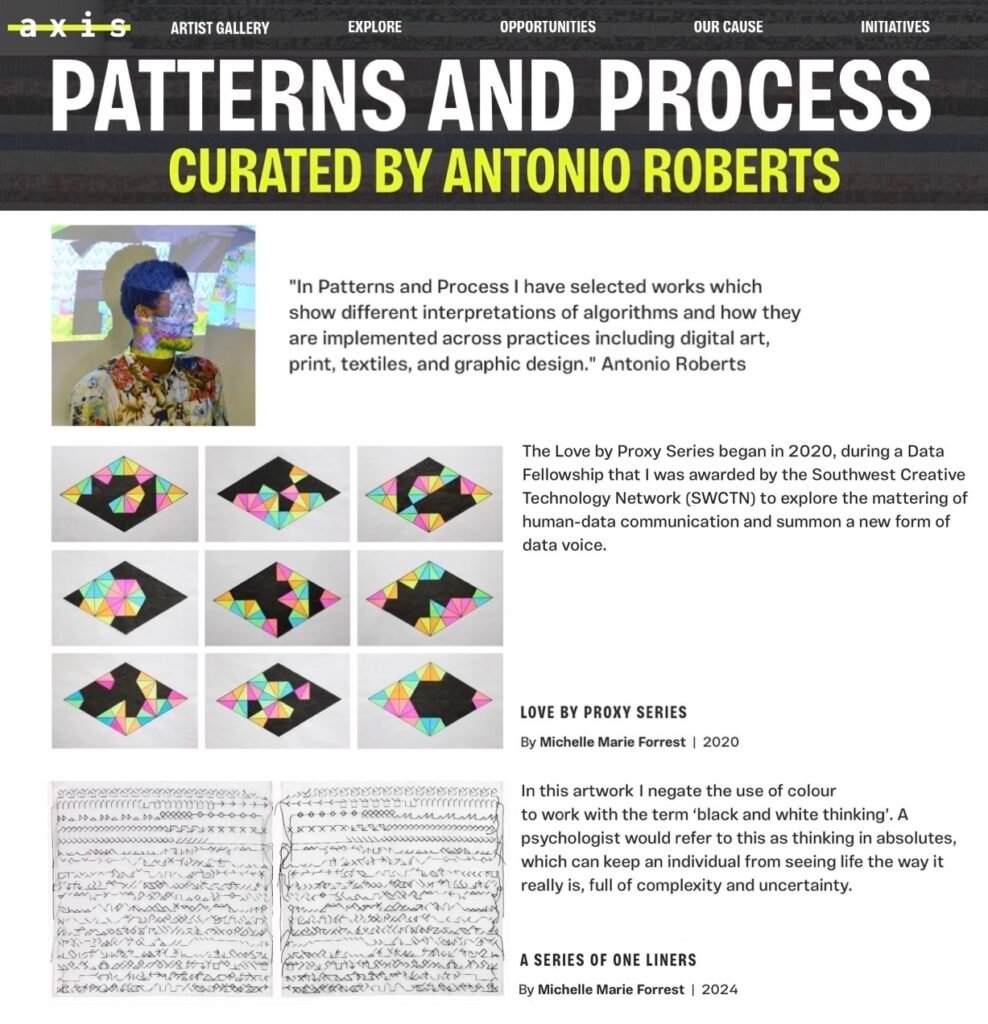
Following a ‘Critical Friend Conversation’ with Roberts, I began using the free visual programming tool ‘p5.js’ to transcode my embroidery drawings as a digital representation, operated by an unproductive algorithm, in which, my house puzzle never completes.
Reaching a technical limit, by November 2025, I was invited to become a resident of the creative technology space “The Studio”, in Bath, to develop the work and extend my knowledge and skills in immersive tools, to critically explore digital tools as both subject and material.
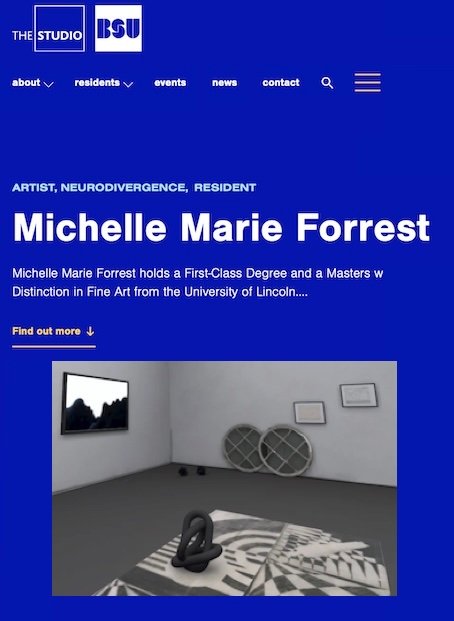
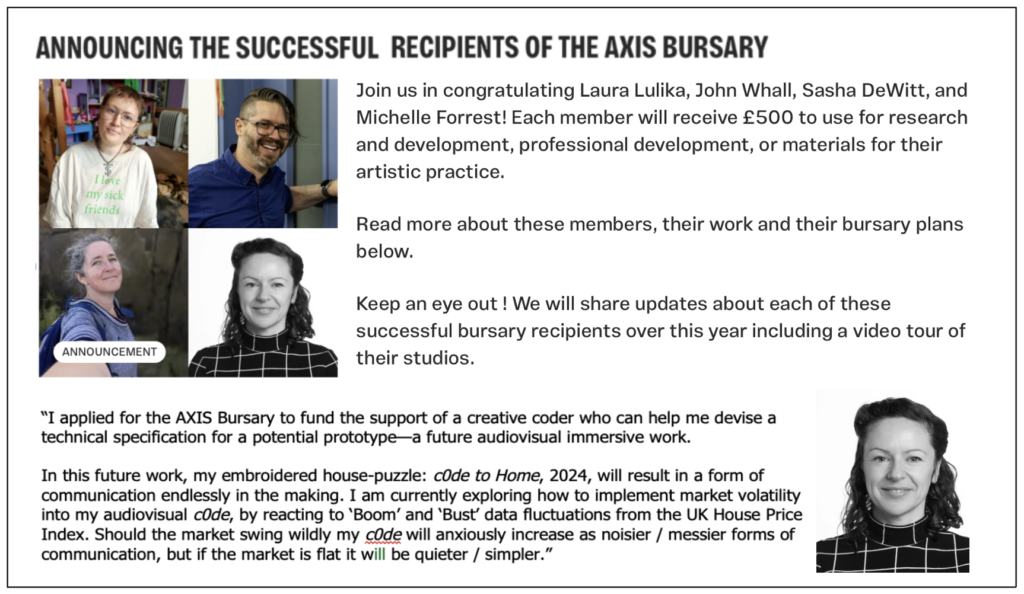
By March 2026, AXIS awarded me a £500 bursary so that a fellow resident (musician and creative coder Charlie Hooper-Williams) could help me build a technical specification to develop c0de to Home.
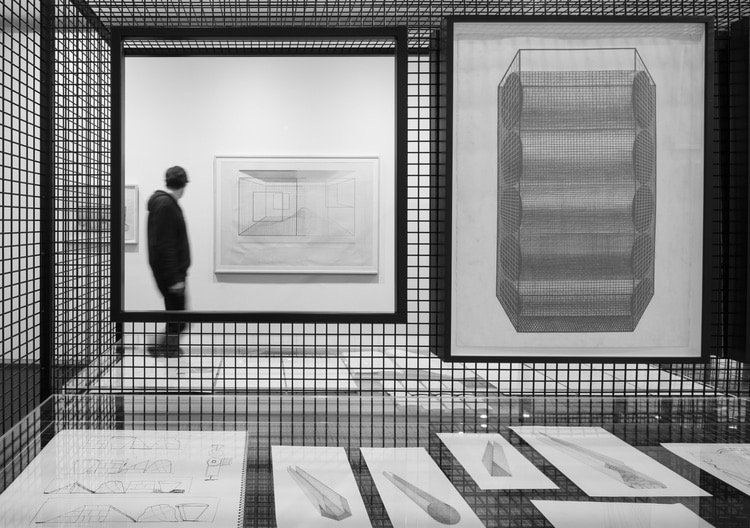
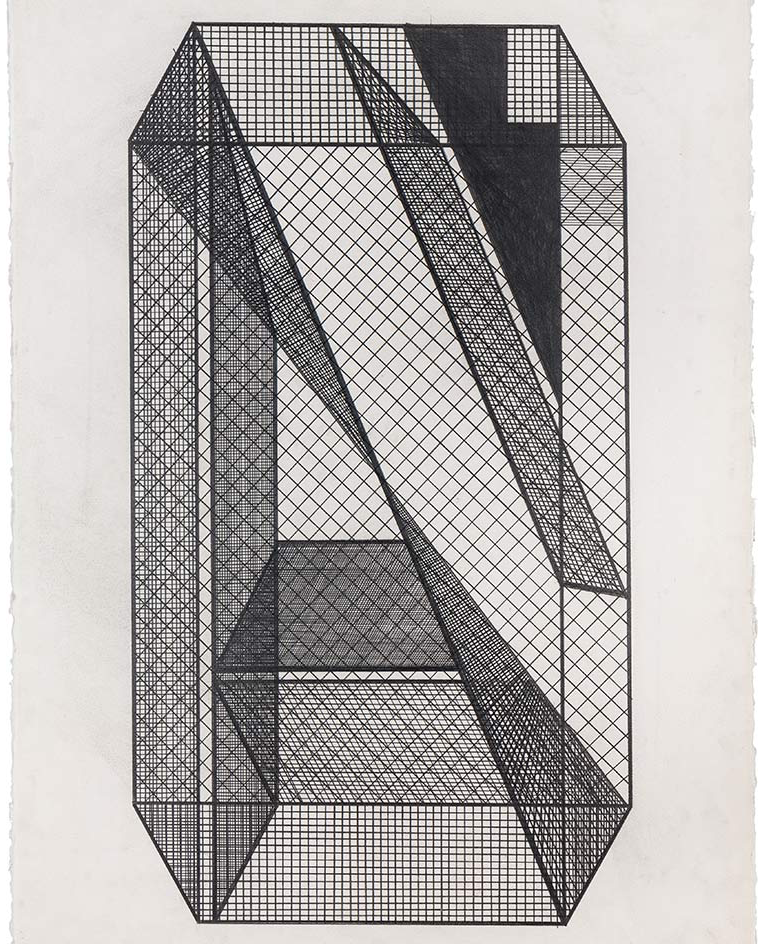
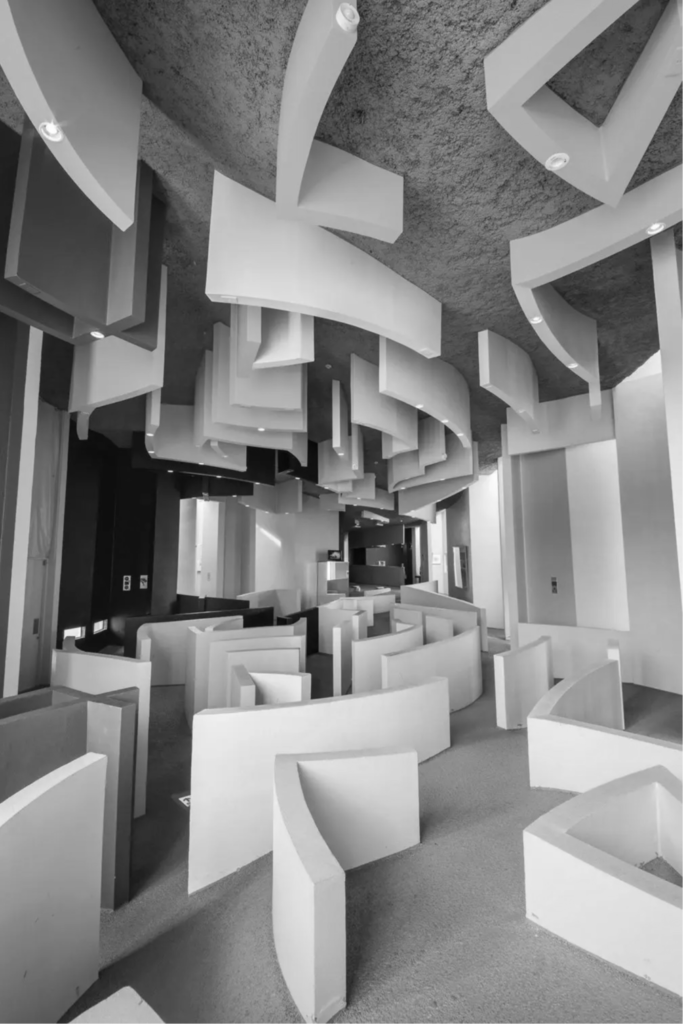
Investigating the spatial methodologies of Shusaku Arakawa and Madeline Gins, to focus on how architectural disorientation can cultivate a state of somatic (bodily) awareness, I want to create an architectural scale experience between the physical and the digital. Exploring how sensory friction can disrupt the user to stay alert and active, I want to explore ways to avoid the viewer from passively consuming digital content, to trigger a physical, sensory reaction that makes the viewer pause and think about how the body becomes disconnected from the digital world, to read between the lines, so to speak, by disorienting the body to wake up the mind.
Im May 2026, I received a lot of interest while showcasing c0de to Home at the Bath Digital Festival,. Through a synchronisation of flesh and code, I added a ‘Respiratory Engine’ – an inhalation and exhalation to accompany my digital stitches. Feedback included feeling “transfixed by the audiovisual rhythm” and “having harnessed the exertion and anxiety of labour”.
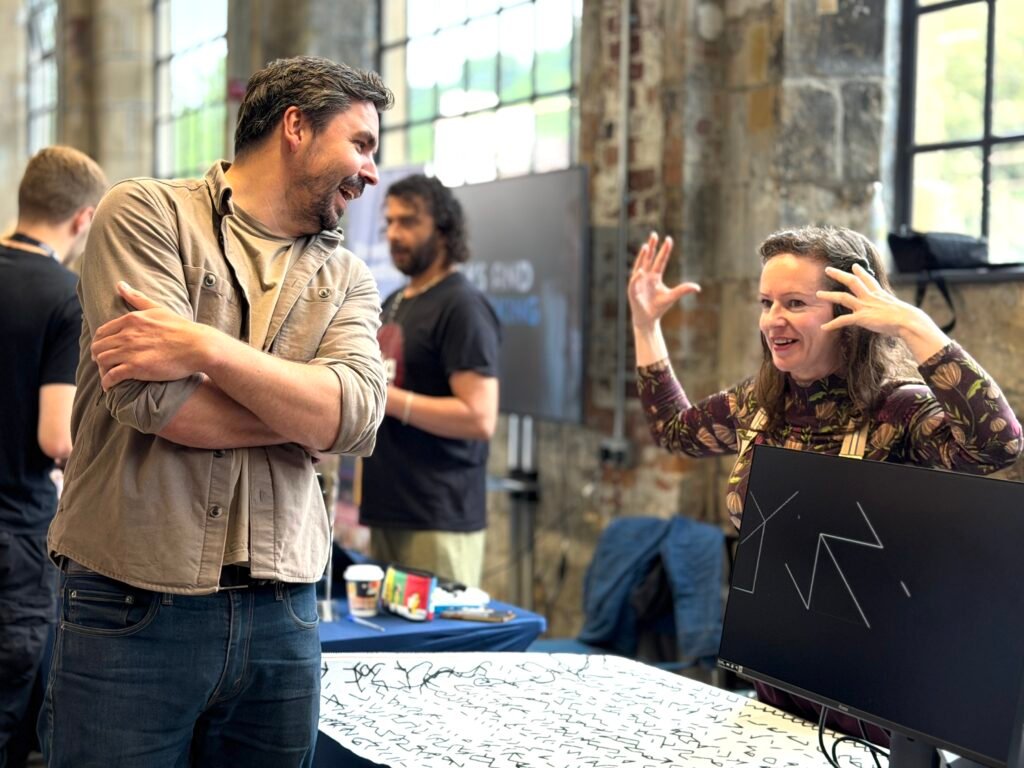
Bath Digital Festival Showcase, May 2026: Speaking to a visitor about attempting to process the UK property market and the systems supporting it and how it has impacted upon c0de to Home.
Photo Credit: iamrob.co.uk
Click on the below iframe image to activate the sound: