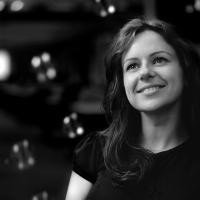
Raised in a rural village in Northeast England, my first home lacked an internal toilet or bath. Shortly after my father installed a bathroom, the council demolished the house—and then our second, a prefab. Our third, an ex-council house my parents proudly bought, was built on a filled mine shaft that buckled under the weight of our blended family. As a sickly child, I observed my parents’ physically demanding work ethic, often mirroring my mother’s cleaning rituals. As I grew stronger, I learnt to lay bricks alongside my father, who reconfigured the home to give us each a little corner of our own.
As the only family member to attend higher education, I applied at twenty-seven, utilising fee waivers for those from low-income backgrounds. While saving for my living costs, I trained as a database developer, which I described to my family as an electronic form of building and cleaning a tall, anti-Ballard ‘High Rise’ apartment where, akin to a Rubik’s cube puzzle, residents could be repositioned to live alongside one another as equals, beyond social systems of class.
I graduated with a Degree in Fine Art at thirty and moved to London to immerse myself in a contemporary art world inaccessible during my youth. While working in the financial district to manage student loans and save for a Master’s, I witnessed the global financial crisis firsthand. This economic shake-up became a defining undercurrent for my practice. During this period, I produced site-reflective installations outside traditional galleries. Responding to semi-derelict yet wealthy postcodes, the works Still Life and Cleanliness is next to Godliness explored the notion of home and the ritualistic act of cleansing an environment.
Though I intended to study my Master’s in London, financial constraints led me North for a residency at my undergraduate university. Here I began processing the social impact of the economic crash, appropriating the term ‘window dressing’ to critique how financiers can make things look better than they truly are. Departing from Louise Bourgeois’s Cell Series, I emptied my architectural units and titled them ‘Moratoriums‘, precariously counterbalancing them as a declaration of a breaking point.
Completing my Master’s at forty, as my portfolio began to reach new heights, the works Blind Faith, Flex, {a violent intersection}, and Kalopsia seemed perpetually on the verge of collapse, mirroring my own exhaustion. I became the epitome of “jiggered”—a term my father uttered after returning from backbreaking labour that ultimately left him incapacitated by his fifties. From this state {net, works} emerged, using live-streams to monitor six precarious sites, paying attention to physical and psychological limits. This was mirrored in my ‘exploded essay’ The Promise of a Scattered Methodology—a constellation of thoughts, images, objects, and processes, whereby matters are echoed and return to themselves, forming intentional loops as a method for reflection.
Ultimately, my practice is rooted in my working-class ‘salvage’ ethic and a recently identified neurodivergent sensibility. This combination drives a restless approach to building—a continuous, iterative, and often unstable process that rejects the notion of a final, static, or finished structure, one that is constantly in flux to evolve and meet changing needs—where I use my practice to process the instability of socioeconomic structures resulting in tangible, structural propositions.