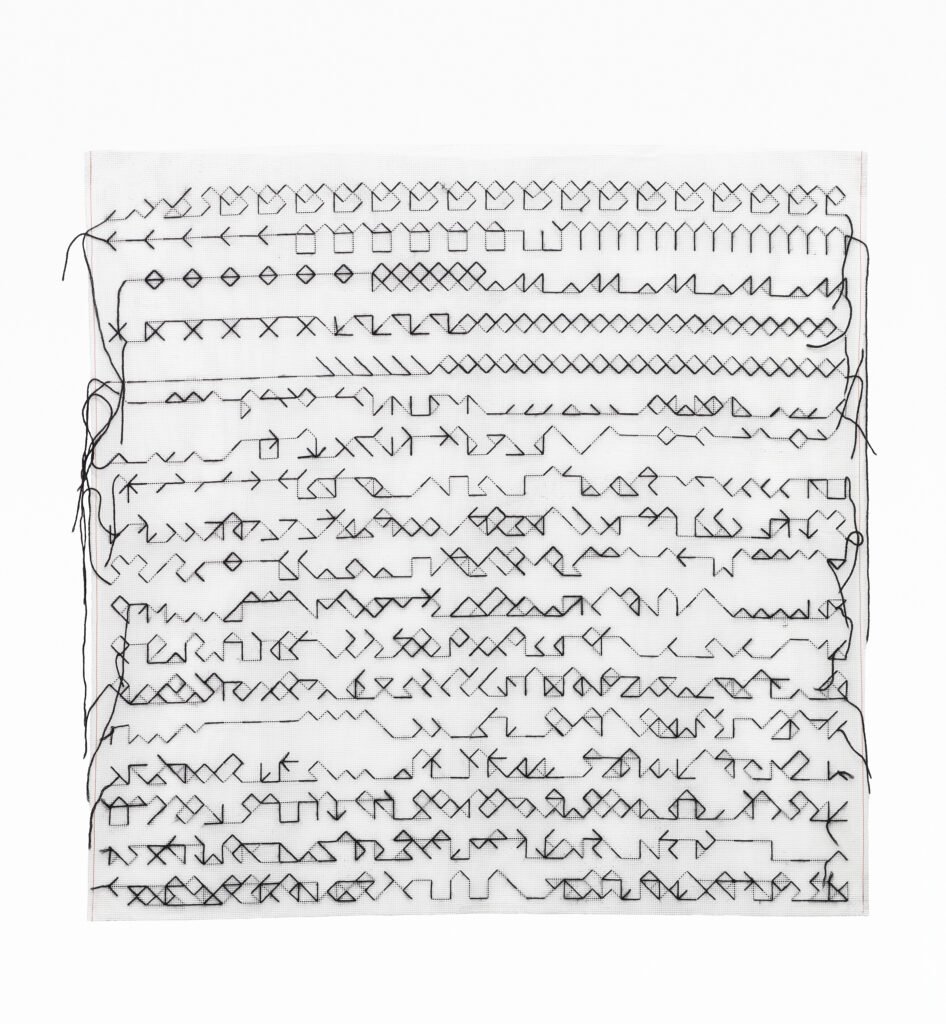
c0de to Home: A Series of one Liners, 2024
Materials: Embroidery canvas, yarn
Dimensions: 94cm W x 94cm H
Photo Credit: Dan Weill
Since 2015, I have been reflecting on the impact of technology to expose and disrupt the invisible architectures that govern digital life. Exploring these matters, as matter, works such as Blind Faith, 2017, wherein, architectural scale spreadsheets physically collapse and Love by Proxy Algorithmic Drawing Series, 2020-ongoing, in which, a series of wholehearted conversation with a text to speech tool becomes a conversation full of holes, I attempt to capture the tension felt when algorithmically governed platforms, data systems, and digital frameworks imperceptibly structure, direct, and constrain human behaviour, thought, and relational intimacy. Today, I am exploring how to make work that is partly hand made and partly made using tech, somewhere between the supposedly virtual and the actual.
I embroidered c0de to Home: A Series of one Liners while navigating the systemic absurdities of a broken housing market. Trying and failing to buy my first property, not once, but three times, this work functions as a subversive sampler—treating domestic space not as a sanctuary, but as a site of ongoing precarity. What materialised was a series of unsolvable house-puzzles, translating feelings of frustration and the unfulfilled promise of homeownership.
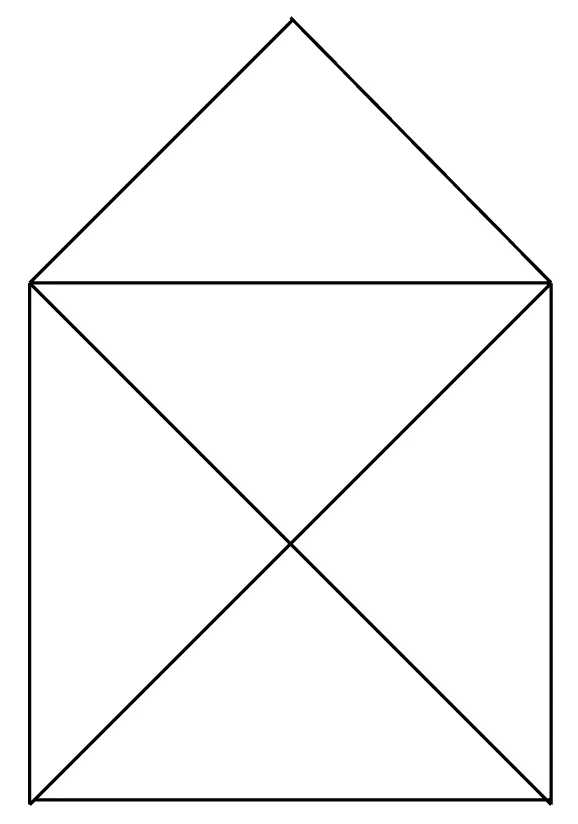
The house puzzle (right) is traditionally drawn from one continuous, non-overlapping line, yet c0de to Home ensures this house-puzzle never completes.
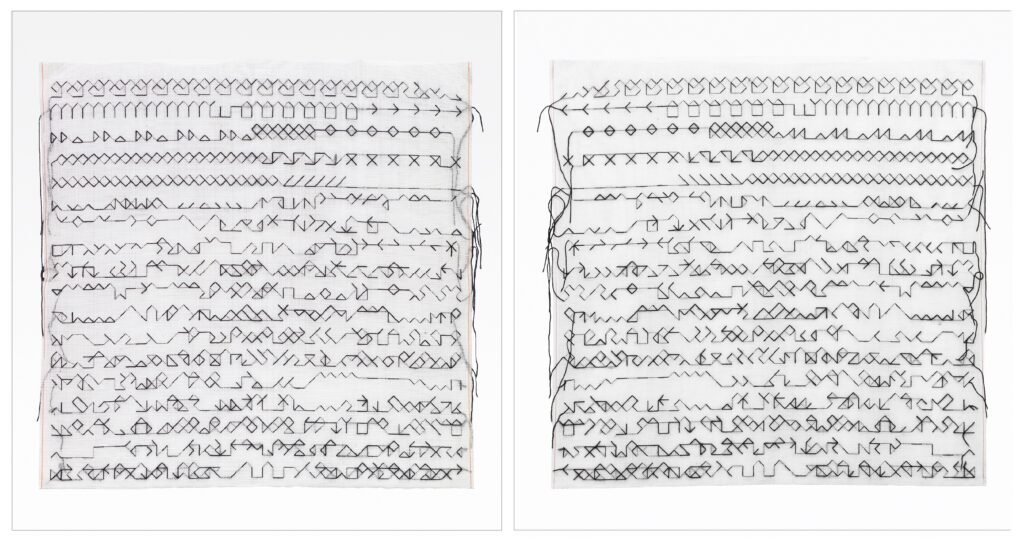
c0de to Home: A Series of one Liners (recto / verso), 2024
——————————————————————————————————–
In 2025, while working on the AHRC funded pilot virtual exhibition We Are Only Partly Real ( video below), a turning point came 12 minutes 50seconds in, when seeing the work turned upside down within a sonic landscape. This experience led me to reimagine my intricate textile as an immersive, architectural-scale installation where art, tech, and human presence become enmeshed.
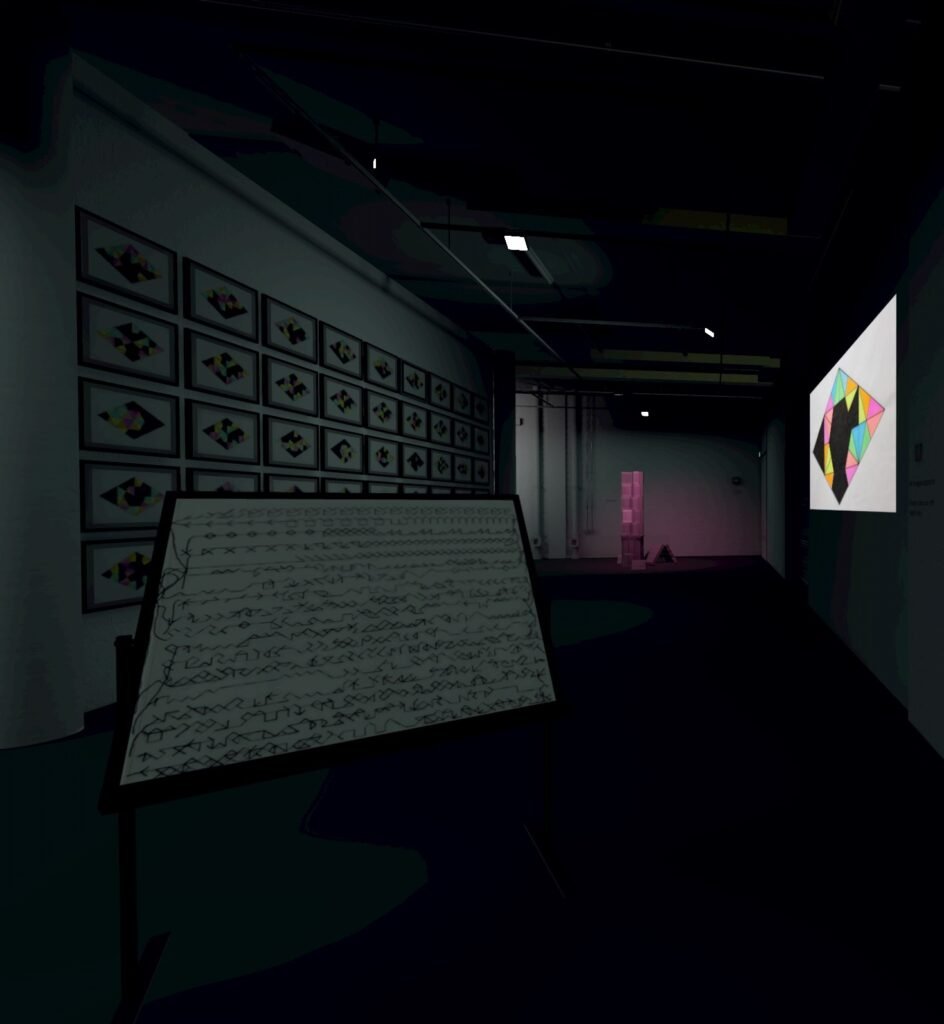
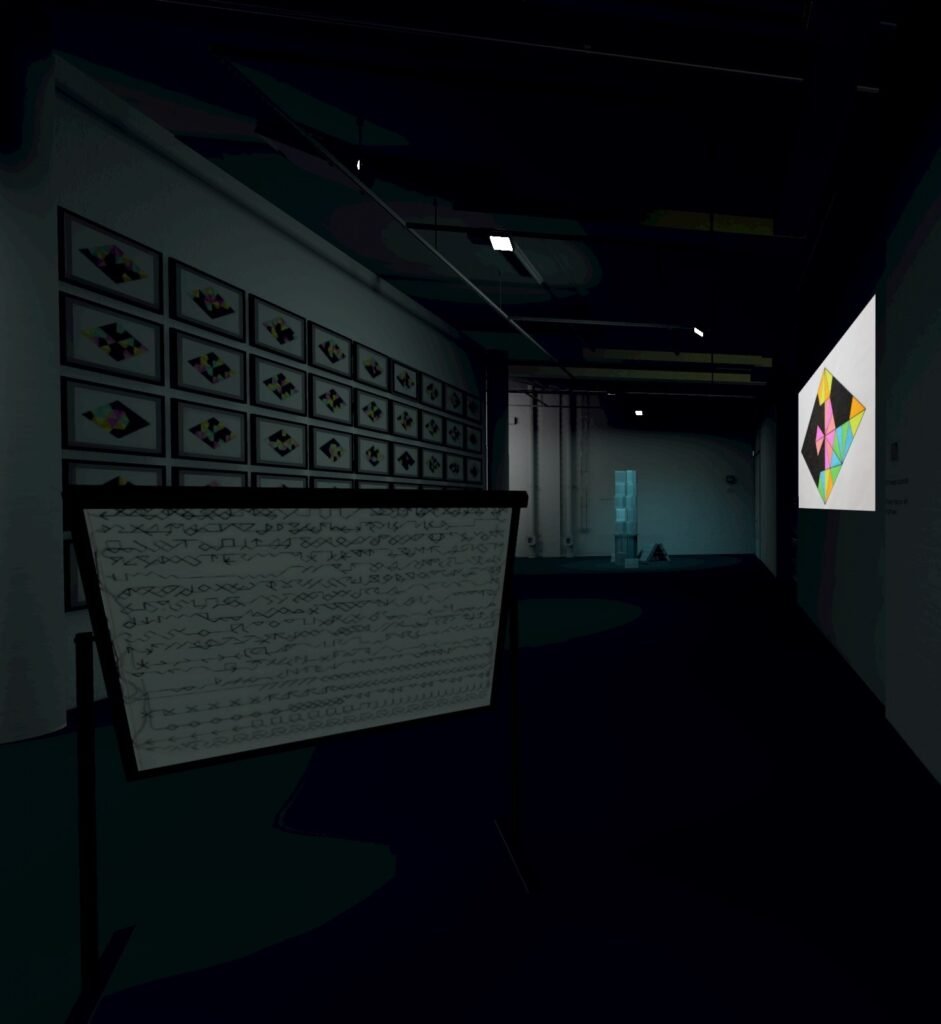
We Are Only Partly Real (night cycle), 2025
VR image credit: Stephen Gray
We Are Only Partly Real, 2025
VR Exhibition video walk-through (17 minutes 17 seconds)
——————————————————————————————————–
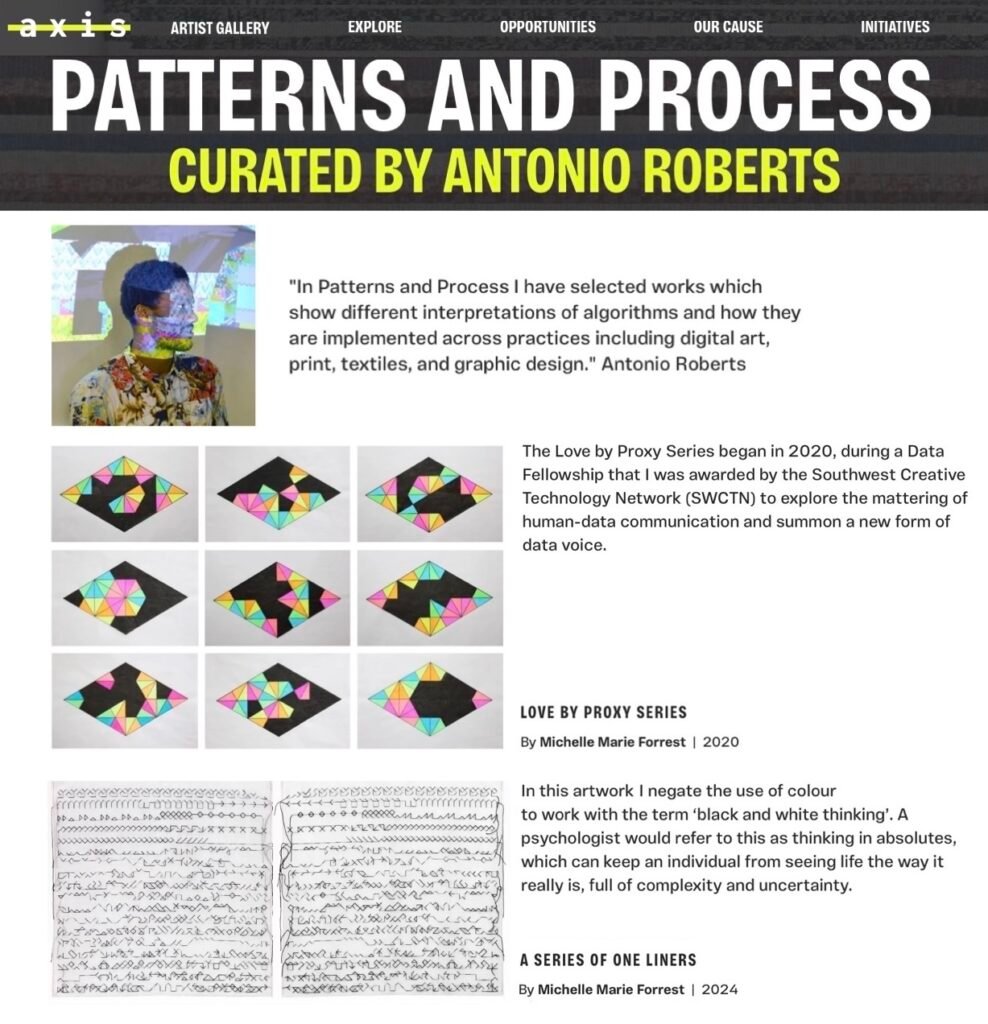
In Oct 2025, c0de to Home then featured alongside my slowly-processed algorithmic drawing series, in the AXIS online exhibition Patterns and Process, curated by digital artist Antonio Roberts.
——————————————————————————————————–
Following a ‘Critical Friend’ conversation with Roberts, I then began using the free visual programming tool ‘p5.js’ to transcode my embroidery drawings into a digital animation, by generating an unproductive algorithm, in which, my house puzzle never completes.
——————————————————————————————————–
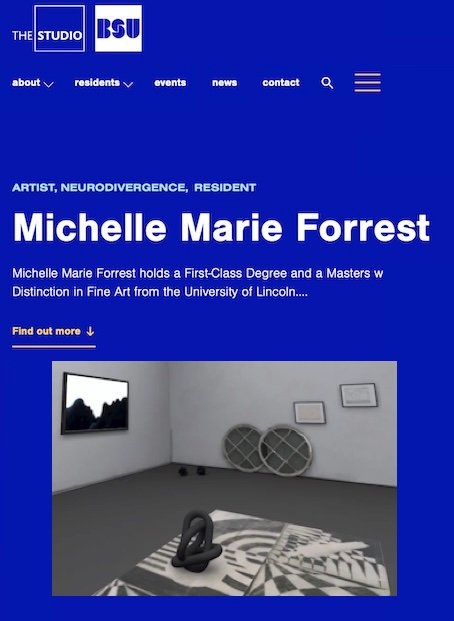
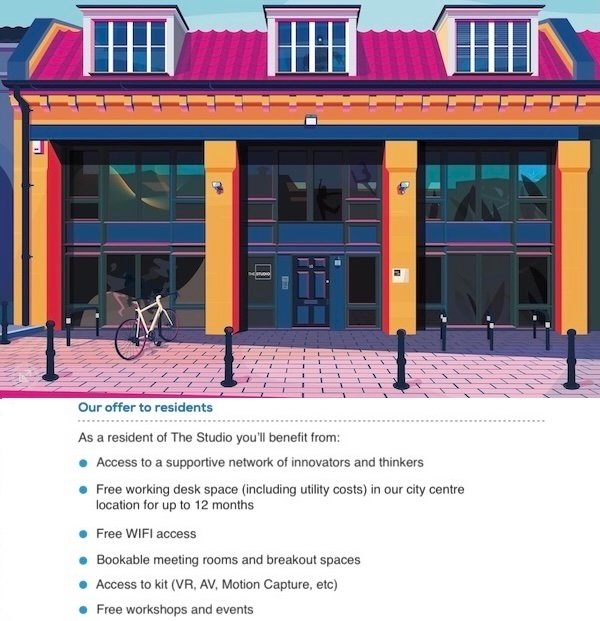
Reaching a technical limit, by November 2025, I was invited to become a resident of the creative tech space “The Studio”, in Bath, as a period of development, in which to refine my ideas and extend my skills in immersive tools and creative technologies, embedding them into my practice by critically integrating digital tools as both subject and material.
——————————————————————————————————–
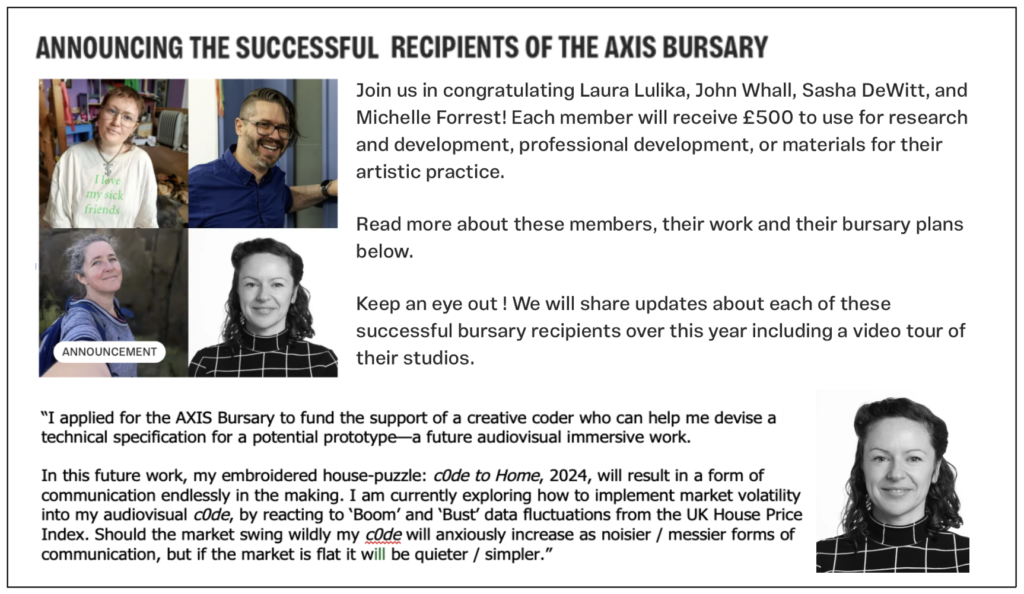
By March 2026, AXIS awarded me a £500 bursary so that a fellow resident (musician and creative coder Charlie Hooper-Williams) could help me build a technical specification to develop c0de to Home.
——————————————————————————————————–
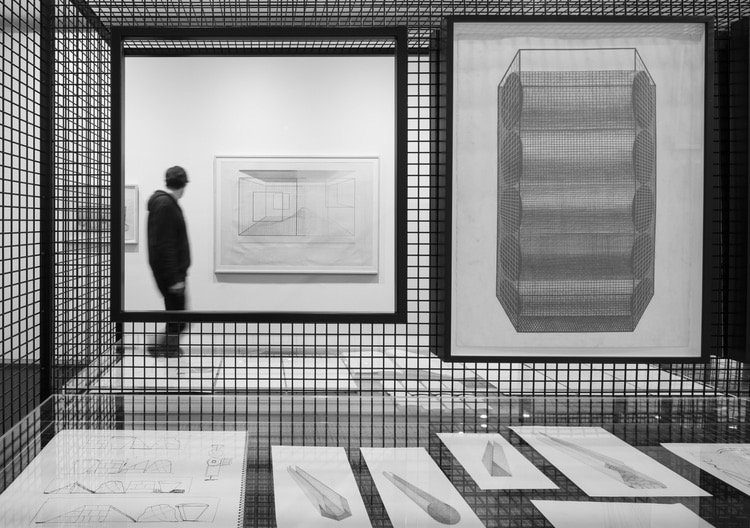
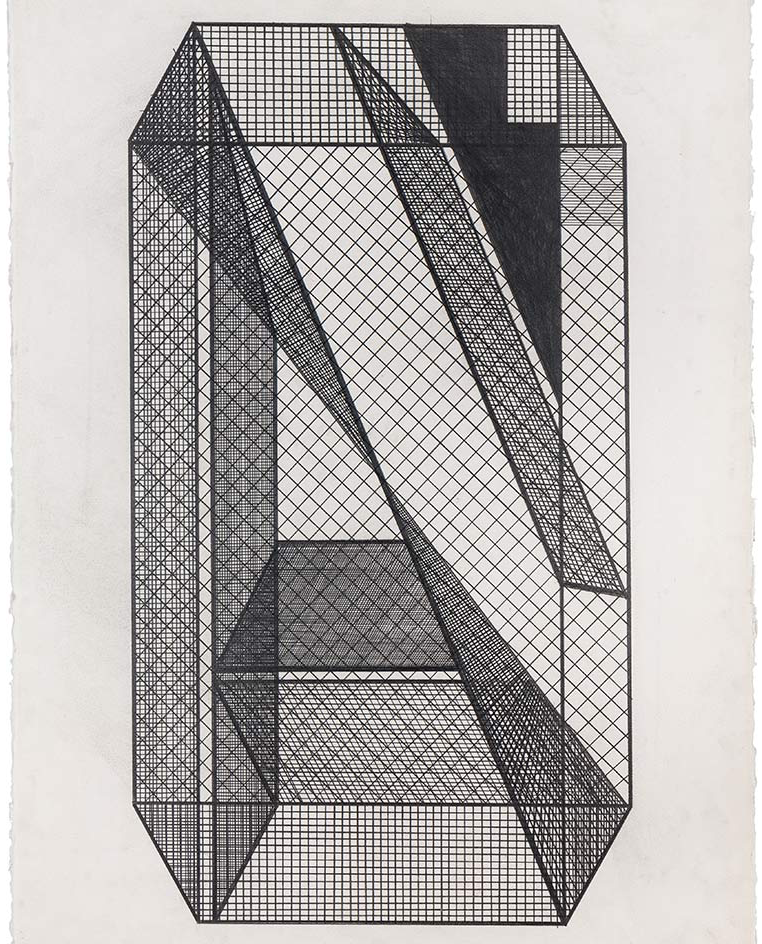
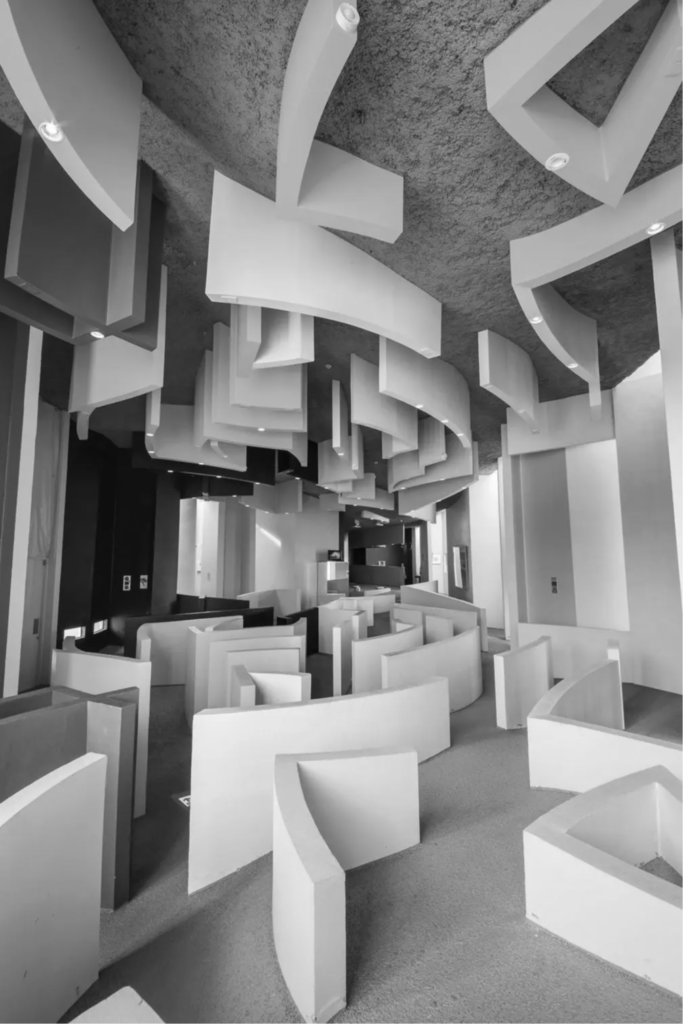
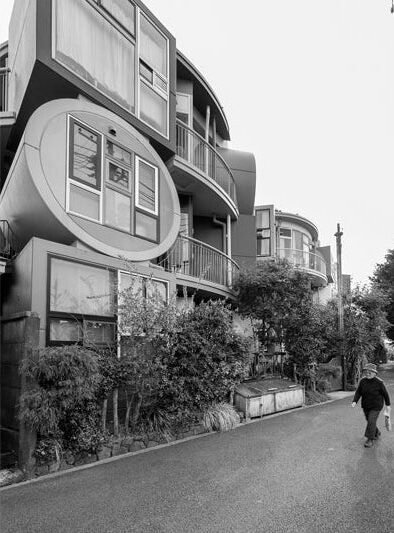
Investigating the spatial methodologies of Shusaku Arakawa and Madeline Gins, focusing on how architectural disorientation can cultivate a state of somatic (bodily) awareness, I want to create an architectural scale experience between the physical and the that resists immediate visual consumption. Exploring how sensory friction can disrupt the user to stay alert and active, I’m trying to stop people from just passively consuming digital content. I want to trigger a physical, sensory reaction that makes them slow down and think about how our real bodies connect to the digital worlds we look at every day, to read between the lines, so to speak, by disorienting the body to wake up the mind.
——————————————————————————————————–
I recently received a lot of interest while showcasing c0de to Home at the Bath Digital Festival, in May. Through the synchronisation of flesh and code, I added a ‘Respiratory Engine’ – an inhalation and exhalation that is responsive to the digital stitches, feedback has included “being transfixed by the audiovisual rhythm” and “having harnessed the exertion and anxiety of labour”.
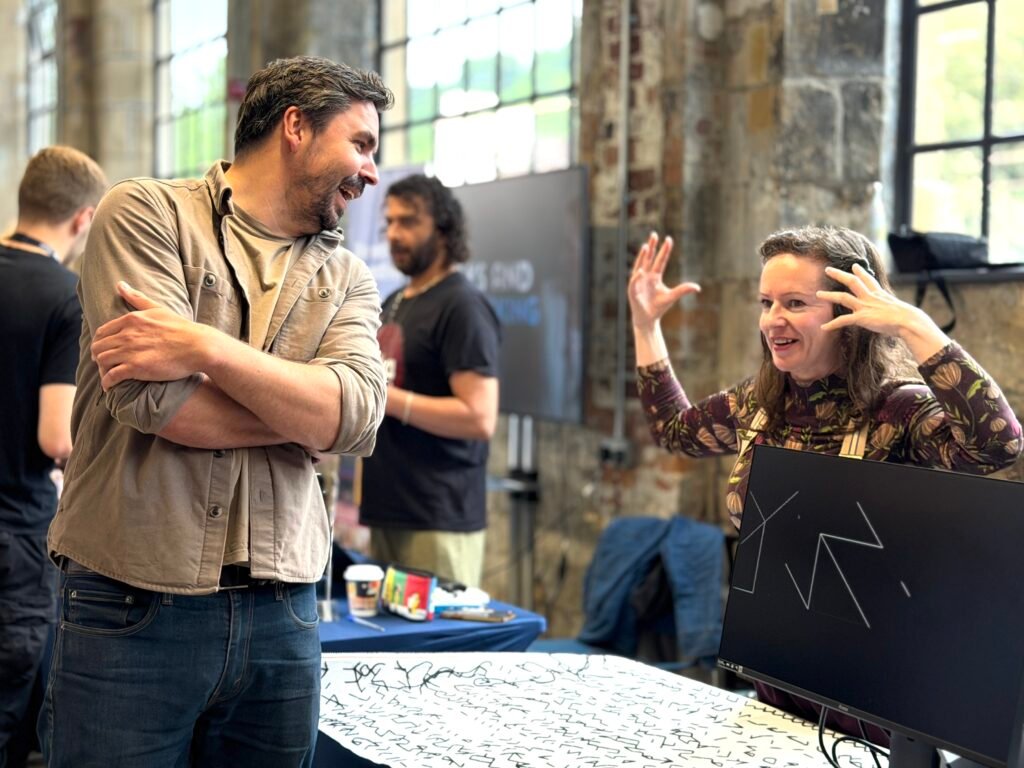
Bath Digital Festival Showcase, May 2026: Speaking to a visitor about attempting to process the UK property market and the systems supporting it and how it has impacted upon c0de to Home.
Photo Credit: iamrob.co.uk
Click on the below iframe image to activate the sound: